Signed in as:
filler@godaddy.com


Celebrating the timeless bond between humanity and the horse.
On July 11, 2026, the world celebrated the first official World Horse Day, established by the United Nations General Assembly through an initiative led by Mongolia.
As part of Mongolia’s historic World Horse Day celebrations, approximately 12,600 horses and riders from Mongolia and abroad gathered in a spectacular Grand Horse Parade on July 13, 2026, honoring Mongolia’s extraordinary equestrian heritage and the profound relationship between humans and horses.
World Horse Day is a global recognition of the profound and enduring bond between humans and horses.
It is a celebration of the horse’s contribution to our history, culture, livelihoods, sport, travel, exploration, and civilization.
This is more than a festival — it is where the global horse world gathers.
Horse lovers, riders, breeders, herders, athletes, historians, cultural organizations, businesses, and equestrian communities from around the world come together to celebrate, connect, and salute the horse.
Every July 10 - 14
Ulaanbaatar, Mongolia

Where Eagles Fly and Ancient Traditions Live
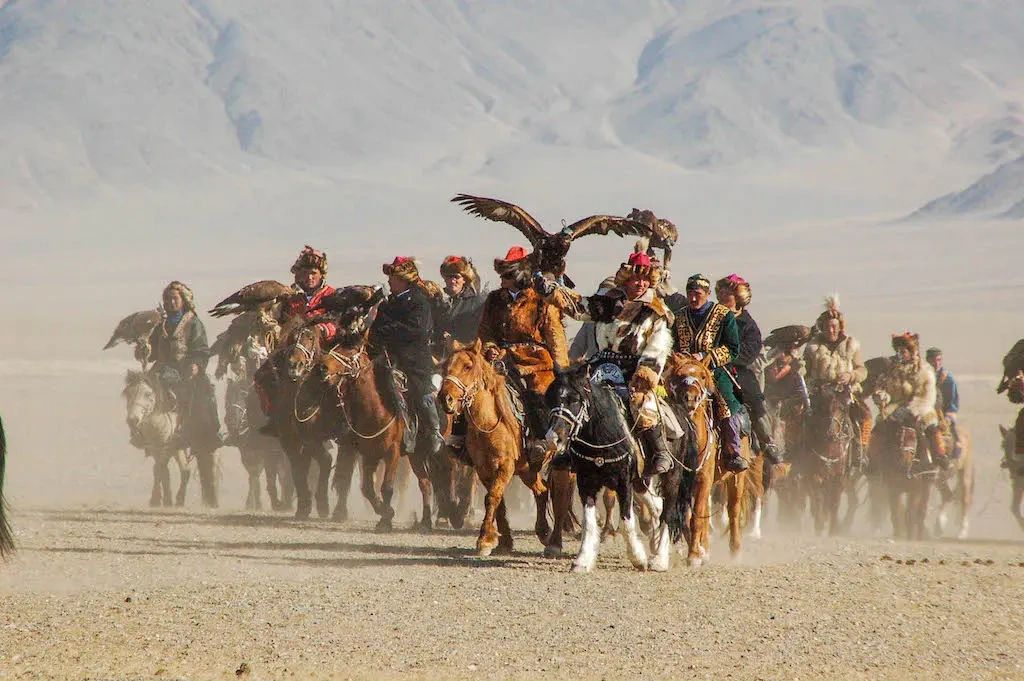
High in the dramatic Altai Mountains of western Mongolia, the Golden Eagle Festival brings travelers face-to-face with one of Central Asia’s most extraordinary living traditions.
Held annually in Bayan-Ölgii Province, the festival celebrates the heritage of Mongolia’s Kazakh eagle hunters, known as bürkitshi—men and women who have preserved the remarkable partnership between horse, hunter, and golden eagle across generations.
For two unforgettable days, eagle hunters arrive from across the region dressed in traditional embroidered garments and magnificent fur coats, riding decorated horses with powerful golden eagles perched upon their gloved arms.
The celebration begins with a spectacular parade of eagle hunters on horseback, creating one of the most iconic scenes in Mongolia.
Throughout the festival, hunters and their eagles participate in competitions demonstrating their connection, discipline, speed, and accuracy. Eagles may be released from surrounding hills and called back to their handlers or challenged to descend toward a moving lure. Awards also recognize traditional Kazakh dress, beautifully ornamented horses, and the presentation of hunter and eagle.
Beyond eagle competitions, visitors can experience traditional horseback games, archery, Kazakh music, handicrafts, local foods, and cultural performances. Events commonly include Tenge Ily, in which riders attempt to pick an object from the ground at speed, along with other traditional equestrian contests.
For generations, Kazakh nomadic families of the Altai have trained golden eagles to assist with winter hunting, traditionally pursuing animals such as foxes and hares across Mongolia's snow-covered mountains.
The relationship is far deeper than simply training a bird. Raising and working with an eagle requires patience, trust, knowledge, and years of cooperation between hunter and bird.
Today, the festival helps preserve and pass this knowledge to younger generations while sharing Kazakh culture with visitors from Mongolia and around the world. The broader tradition of falconry has also been recognized by UNESCO as Intangible Cultural Heritage, reinforcing its significance as a living cultural practice.
The main 2026 festival is currently listed by several Mongolia travel and event sources for October 3–4, 2026, in Bayan-Ölgii Province, at festival grounds in the Bugat area near Ölgii. A smaller Sagsai Eagle Festival is listed for September 17–18, 2026.
Because published schedules can vary between local organizers and tour operators, travelers should reconfirm the final venue and dates before arranging flights into Ölgii.
The Golden Eagle Festival is more than a performance for visitors. It is an opportunity to enter a living world of Kazakh nomadic culture, horsemanship, family tradition, magnificent landscapes, and the extraordinary bond between a hunter and an eagle.
Discover the Altai.
Meet the Eagle Hunters.
Witness a Tradition Still Alive.
October 03 - 04, 2026
Western Mongolia
The Thousand Camel Festival — “Түмэн Тэмээний Баяр” is one of Mongolia’s most distinctive winter cultural celebrations, held in the Gobi Desert to honor the two-humped Bactrian camel and the camel-herding traditions of Gobi nomads. The festival has been organized since 1997, with goals that include protecting the Bactrian camel population, supporting local herders, preserving nomadic heritage, and developing winter tourism.
Where the Gobi comes alive.
Against the vast, frozen landscape of Mongolia’s Gobi Desert, camel herders gather with their magnificent Bactrian camels for an extraordinary celebration of heritage, resilience, community, and nomadic life.
Visitors can experience camel parades, long-distance and short-distance camel races, camel polo, camel-mounted archery, traditional costumes and beautifully decorated camels, local music and performances, camel and sheep-wool products, and traditional camel-milk foods.
The festival is more than a spectacle created for visitors. It is an important gathering for the Gobi’s camel-herding communities themselves—a place to celebrate their animals, exchange traditions and skills, support local livelihoods, and pass their cultural heritage to future generations.
One of the festival’s most remarkable moments occurred in 2016, when a mass Bactrian camel race involving around 1,200 camels earned Guinness World Records recognition.
Imagine standing beneath Mongolia’s enormous blue sky while hundreds of shaggy winter-coated camels gather across the open Gobi. Riders arrive wearing colorful traditional deels, families gather from across the region, races thunder across the desert, and camel caravans move through a landscape that has supported nomadic life for centuries.
It is a rare opportunity to experience Mongolia not merely as a destination, but through the people, animals, traditions, and landscape that continue to define the Gobi.
Come for the camels.
Stay for the culture.
Leave with the spirit of the Gobi.
Every February and March
Gobi Desert, Mongolia

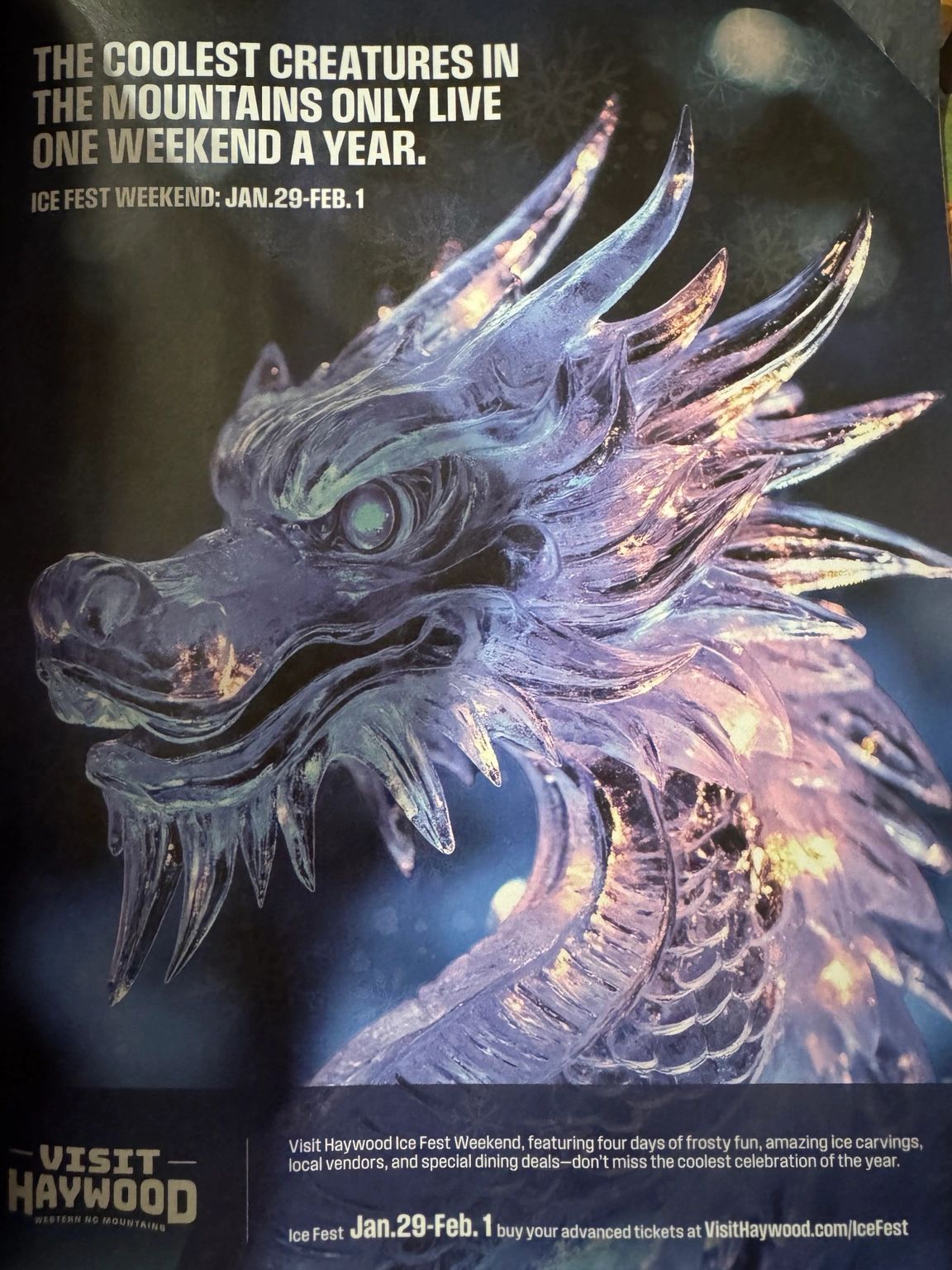
Event: Haywood Ice Fest Weekend
Dates: January 28 – January 31
Location: Haywood County, Western NC Mountains
Theme: Ice carvings, frosty fun, local vendors, and special dining deals.